
Who the Law Was Written For, and Who It Catches
The EU's Right to Repair Directive, formally adopted in June 2024, requires manufacturers of covered product categories to make spare parts, tools, and repair information available to independent repairers at reasonable prices. The initial scope — household appliances, consumer electronics, smartphones — does not name musical instruments or professional audio hardware by category. But enough audio products sit close enough to "consumer electronics" that the Directive's logic is already pressing on manufacturers with EU market exposure. The EU Right to Repair Directive establishes repairability as a baseline expectation, not a manufacturer's discretion.
In the US, the Federal Trade Commission's 2021 report Nixing the Fix documented widespread repair restrictions across consumer hardware and argued they harmed both competition and consumers. The FTC has since brought actions in adjacent categories, and several US states have passed or advanced right-to-repair statutes. Audio hardware is not named in any of them, but the regulatory direction is clear: the burden of justifying service restriction is shifting toward manufacturers.

Where Audio Hardware Actually Sits
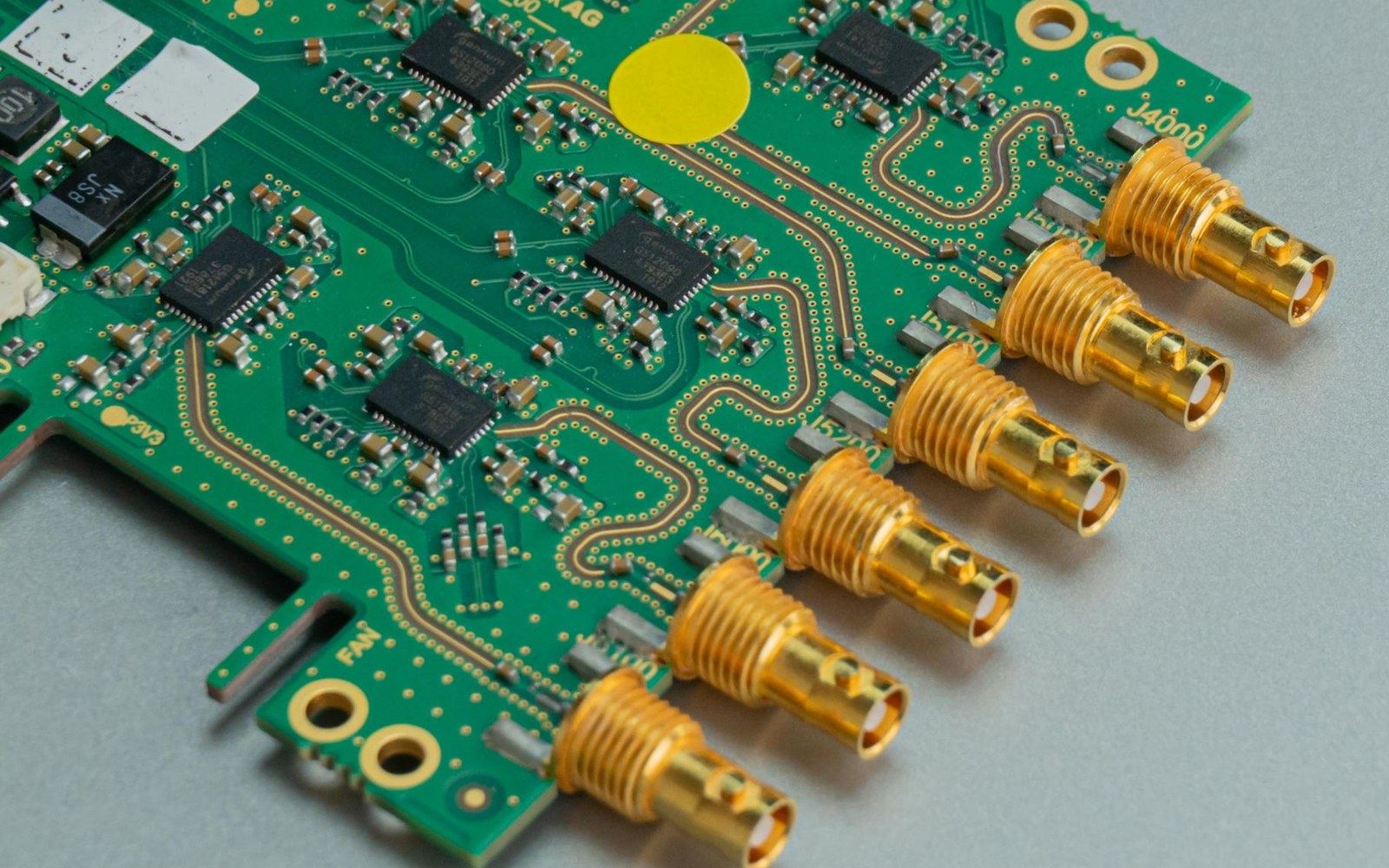
The structural problem is familiar to any repair technician: modern audio hardware — interfaces, amp modellers, DSP-heavy effects processors — is built on surface-mount components at tolerances that require rework stations, and controlled by proprietary firmware that may lock calibration or authentication to an authorised service process. A Focusrite Scarlett unit with a failed input stage is repairable at the board level; whether Focusrite publishes the schematic to allow that repair is a separate question. As of mid-2025, Focusrite provides service documentation selectively, primarily to authorised centres.
Universal Audio's UAD hardware — interfaces and satellite DSP units — runs firmware tied to UA's licensing infrastructure. An independent technician who replaces a failed component and needs to restore firmware has no sanctioned pathway to do so. The device is physically fixable; the software layer makes it functionally unrepairable without manufacturer involvement. Neural DSP's Quad Cortex presents the same pattern: the DSP architecture is proprietary, firmware updates are delivered through a closed ecosystem, and no service manual has been published.
iFixit, whose repairability framework and repair guides have become a reference point in the legislative debate, has not yet produced dedicated scoring for professional audio products, but its broader advocacy — published schematics, availability of components, no software pairing locks — maps directly onto the problems audio technicians have raised through the Audio Engineering Society's repair-access discussions. The AES has not adopted a formal policy position, but member forums and the AES Standards Committee have engaged with right-to-repair questions in the context of archival and broadcast hardware.
- Schematic availabilitywhether a manufacturer publishes circuit documentation; the baseline demand of repair advocates
- Surface-mount componentssoldered directly to PCB at sub-millimetre scale; requires rework station, not a soldering iron
- Firmware authentication locksoftware that prevents a repaired unit from functioning without manufacturer-side re-authorisation
- Proprietary DSP stackclosed firmware environment that cannot be restored or updated outside the manufacturer's service chain
What Has Been Released, and What Has Not
The contrast between categories is instructive. Rupert Neve Designs publishes service documentation for its hardware, as does API for its legacy console modules. Valve amplifier manufacturers — where point-to-point wiring and through-hole components remain common — have largely maintained schematic availability, partly because the format makes concealment difficult and partly because the customer base expects it.
The boutique pedal sector is mixed. Strymon has released schematics for some discontinued products; Chase Bliss Audio builds on a combination of analogue and MIDI-controlled digital, and its service documentation is limited. At the volume end, Behringer's Music Tribe publishes more service documentation than most of its price-tier competitors, a fact that sits awkwardly alongside its other market controversies.
The legislative pressure will likely resolve along product-tier lines: high-volume consumer-adjacent audio hardware faces the greatest regulatory exposure, while professional and boutique categories may remain outside direct legislative scope for the near term. What the law will not resolve is the firmware authentication problem. A schematic addresses the hardware; it does not touch a proprietary DSP stack that requires manufacturer-side verification to restore. That is the gap that technicians, the AES, and iFixit will keep pressing on — and that legislators are only beginning to understand.