

Reading the Number Against the Record
Fender's serial-number decoder, published and updated by the company, is the most widely consulted in the trade. Prefixes and sequences map to production years with reasonable precision for most post-1976 instruments, though the CBS-era overlap — where the same number series ran across multiple years — regularly produces a range rather than a date. Gibson's Nashville production ledgers, maintained internally, narrow the window further for instruments where the ledger record survives; a full eight-digit serial on a post-1977 Gibson encodes the year, day of year, and production sequence directly. Moog serial records, stewarded by the Bob Moog Foundation, have been used to document and authenticate Minimoog Model D units where ownership history is disputed.
None of these registers is complete. Pre-war Gibson records are fragmentary. Fender's early 1950s instruments — the years that gave Leo Fender the Telecaster and Stratocaster — were numbered inconsistently enough that body date stamps and neck pocket pencil markings carry as much weight as the serial itself. Custom Shop and limited-run instruments frequently fall outside standard decoder logic entirely.
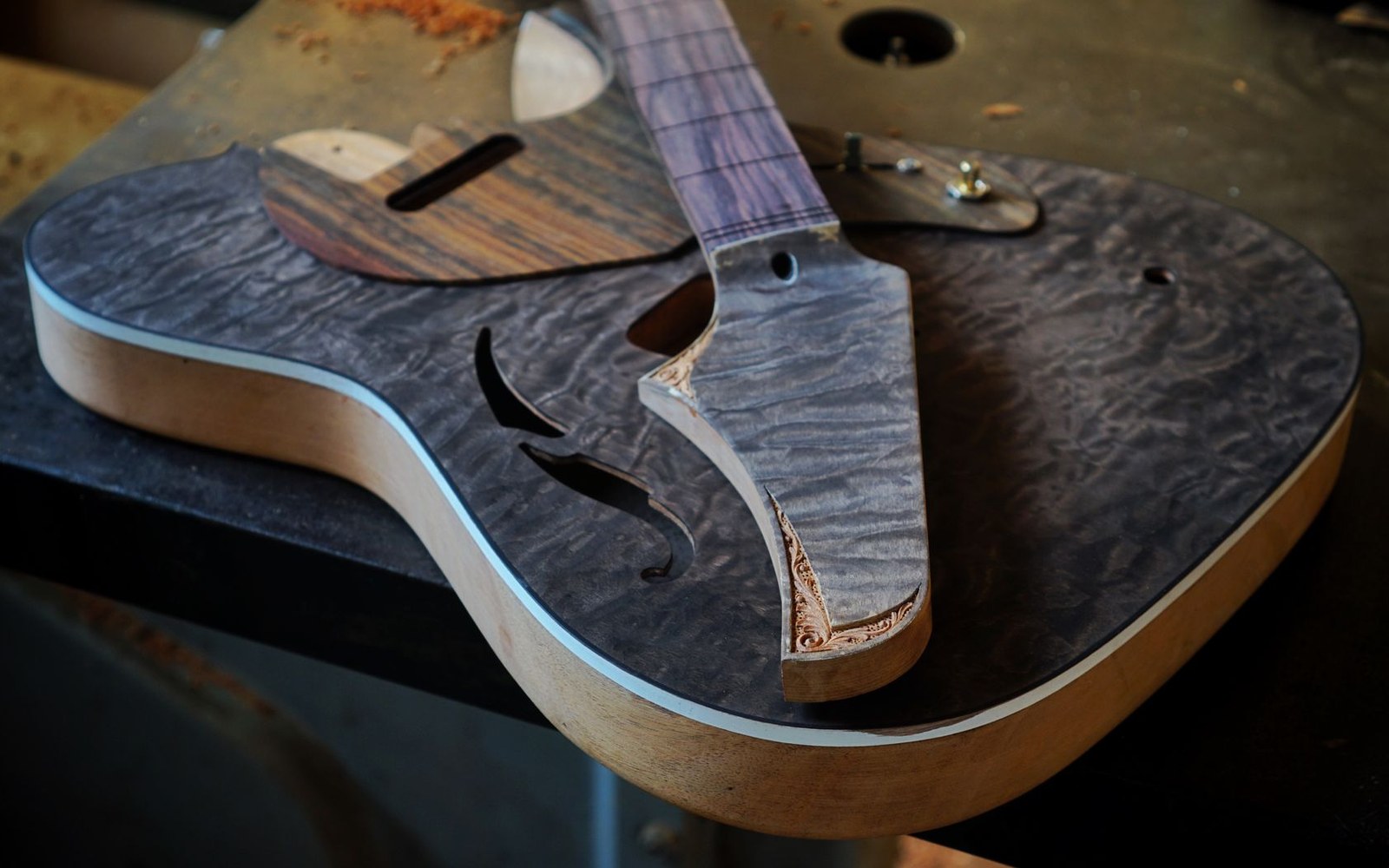
When the number is ambiguous, technicians cross-reference physical evidence: pot codes (the six-digit date stamp on potentiometers, read from the EIA source-and-week format), pickup bobbin materials, finish chemistry under UV light, and hardware casting marks. A refinished body shows in the finish thickness and in paint migration into the pickup routes; a replacement neck shows in mismatched screw-hole wear patterns. On acoustic instruments, internal label ink, brace scalloping style, and fingerboard materials can all contradict or confirm a number.
The register dates the instrument as built; the physical evidence dates what happened to it afterward. A competent used-market appraisal — whether for insurance, sale, or dispute resolution — reads both in sequence, treating neither as definitive alone.