Why Roland Stopped Building It
The TR-808 Rhythm Composer shipped in 1980 at a retail price that undercut the cost of a live drummer — which was the pitch. Roland's engineers built it around analog synthesis rather than recorded samples, so every kick, snare, and hi-hat was a voltage-controlled circuit event rather than a playback trigger. The bass drum, driven by a tunable oscillator with a long decay envelope, produced a sub-frequency thud that no contemporary drum machine matched.
The discontinuation came down to a parts problem. The BA662 chip — a voltage-controlled amplifier used in the 808's voice circuits — was manufactured by a supplier that ceased production, leaving Roland without a stable parts source. When the remaining stock of chips degraded, Roland had no clean path to continued manufacture. According to commonly cited accounts of Roland's history, production ended in 1983 after approximately 12,000 units.
The commercial reception had already been cool. Professional drummers and session fixers found the sounds unconvincing as drum replacements, which was how the product was positioned. Studios passed. The 808 reached the used market cheap — as low as a few hundred dollars in the mid-1980s — which put it within reach of exactly the producers who would rebuild popular music around it.
What Happened in the Secondhand Market
Marvin Gaye's "Sexual Healing" in 1982 was among the earliest widely heard recordings to place the 808's kick prominently in a mainstream context. Afrika Bambaataa and Soulsonic Force's "Planet Rock," the same year, used the 808 alongside a Roland MC-4 sequencer and Kraftwerk samples to define the sound of electro. Chicago house producers acquired 808s from pawn shops and used-instrument dealers throughout the mid-1980s; the machine's open hi-hat and cowbell patterns became structural elements of the genre. In Houston, the 808's extended bass decay — tuned low and slowed — anchored the aesthetic that would eventually be called chopped-and-screwed.
The reasons the 808 outlasted its intended era are partly sonic and partly economic. The bass drum's pitch-tunability meant it sat differently in a mix than any sample of a real kick: it occupied sub-bass frequencies that smaller playback systems of the time smeared but that modern systems reproduce cleanly. The economics of early hip-hop and house production made a $200 used drum machine with a built-in sequencer a complete rhythm production unit. No maintenance contract, no session fee, no room.
BA662 — the voltage-controlled amplifier chip whose supply failure ended TR-808 production
The Sampling Census
By the time streaming catalogs became large enough to analyze at scale, the 808's footprint was measurable in ways that analog-era journalists could not have quantified. Tracklib's sampling census, covering tracks across hip-hop and electronic music, has consistently identified the TR-808 — its sounds and direct samples of recordings built on it — as the most frequently sampled instrument source in recorded music history. The 808's cowbell, open hi-hat, and bass drum appear across decades of production without any single rights holder controlling them, because the sounds themselves are synthesized circuit outputs, not recordings, and anyone with a working machine can generate them afresh.
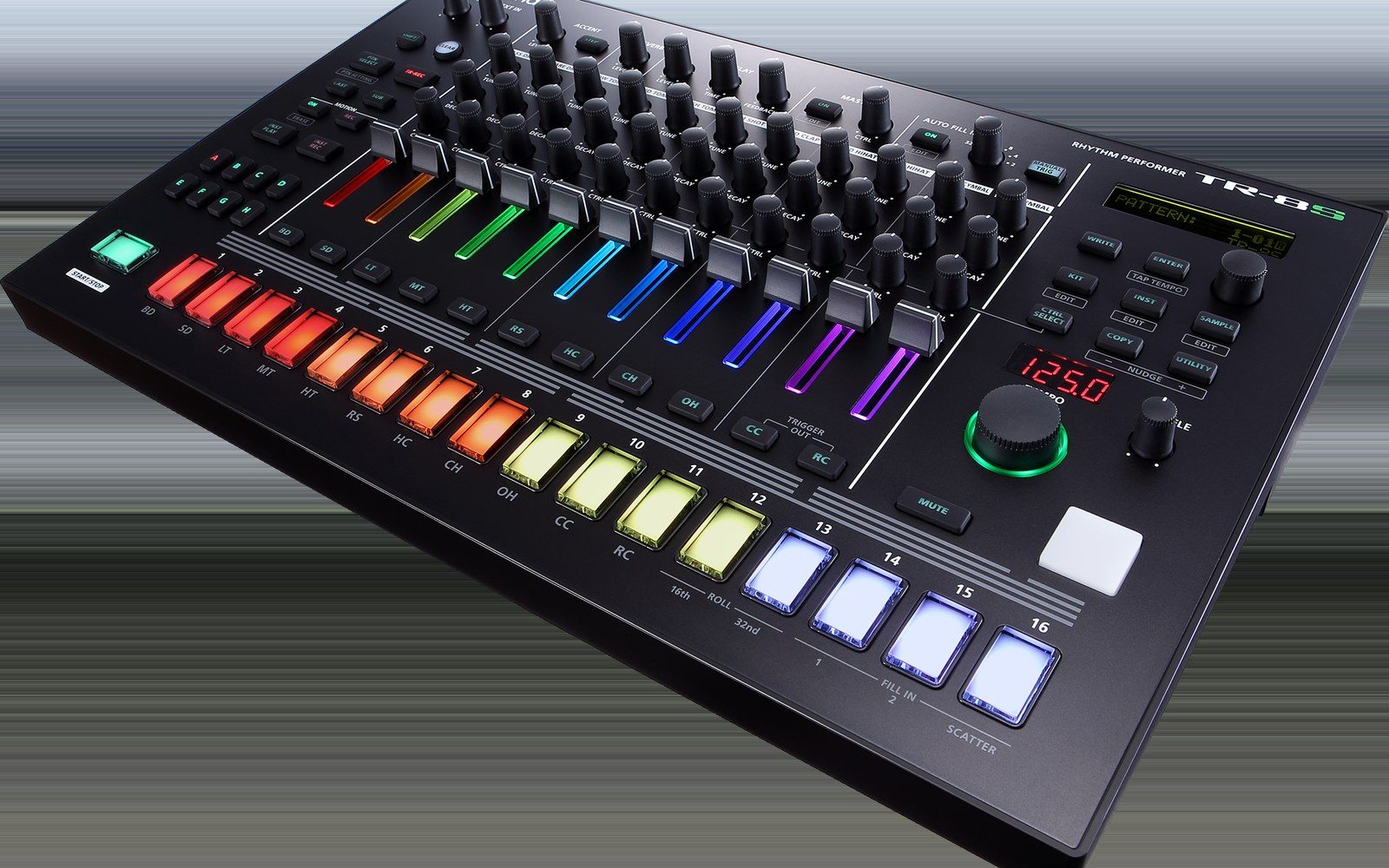
Roland's own relationship with the 808's legacy has been active since the TR-8 and TR-8S product line reintroduced ACB (Analog Circuit Behavior) modeling of the original circuits. The 808's sound engine is also available through Roland Cloud as a software instrument. Neither product changes the fact that the original 12,000 units — increasingly valuable, increasingly fragile given the BA662 situation — are the source material that a multibillion-dollar genre built on.
Twelve thousand units is a short production run by any standard. A single successful electric guitar model ships that in a week. What the 808 achieved is the clearest available proof that commercial failure at release is not a terminal judgment on an instrument's influence — and that secondhand pricing sometimes understands cultural value before the original manufacturer does.