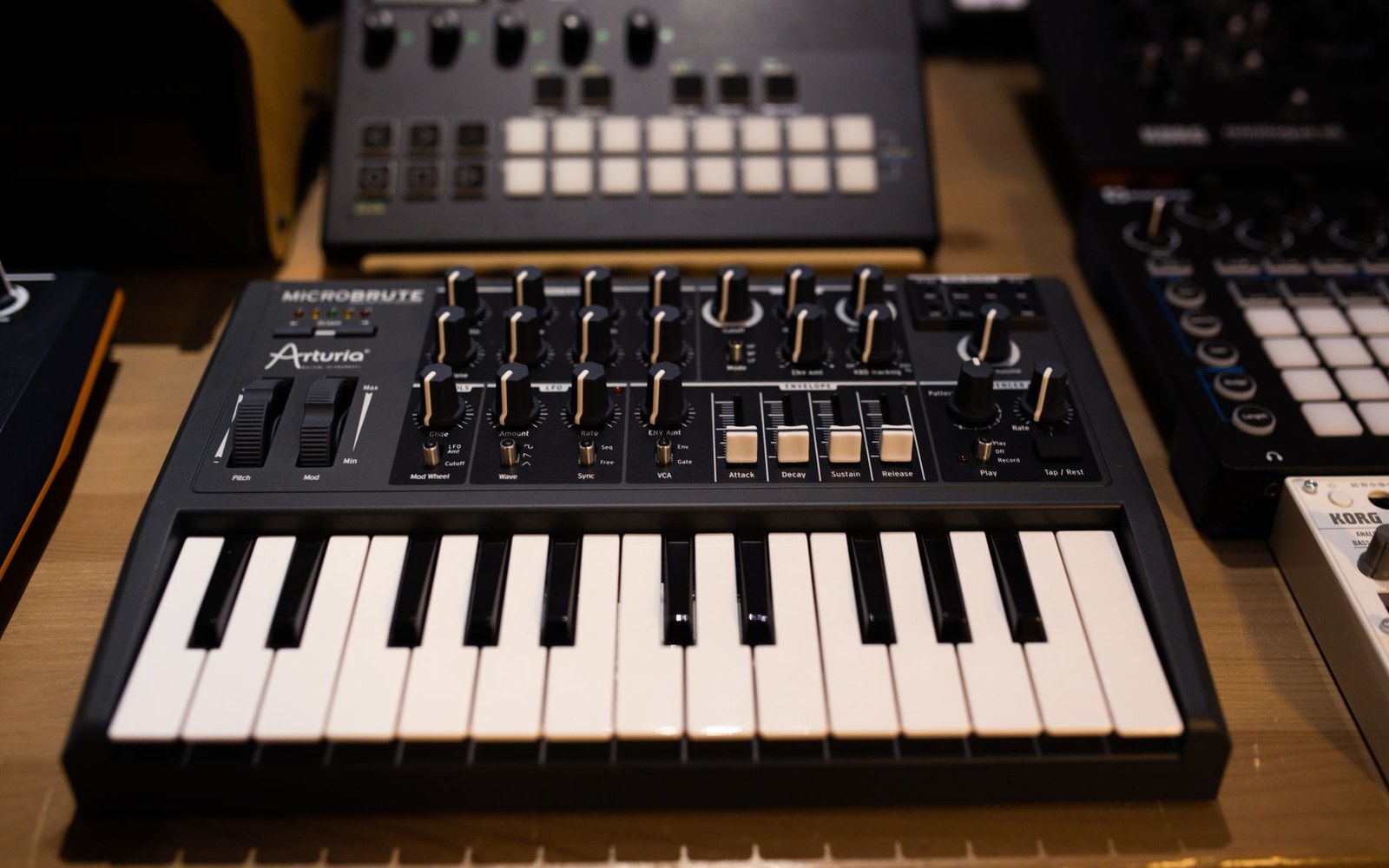

A format that outlasted every prediction about its ceiling
Dieter Doepfer published the A-100 system specification in 1995, setting the rack height at 3U and establishing a common power bus that any manufacturer could adopt. The intent was modest: a compact, affordable alternative to the large-format modular systems that had gone dormant since the 1970s. What followed was not modest at all.
By the early 2020s, ModularGrid — the community-run database that functions as the format's de facto registry — listed more than 15,000 distinct Eurorack modules from thousands of manufacturers. That figure includes discontinued units, regional releases, and one-offs built by cottage operations that exist between luthier and software company. No central body certifies Eurorack products; the format's openness is the mechanism. Any manufacturer that adheres to the 3U height, the ±12V power standard, and the 3.5mm patch-jack convention can ship a module and have it indexed on ModularGrid within days of release.
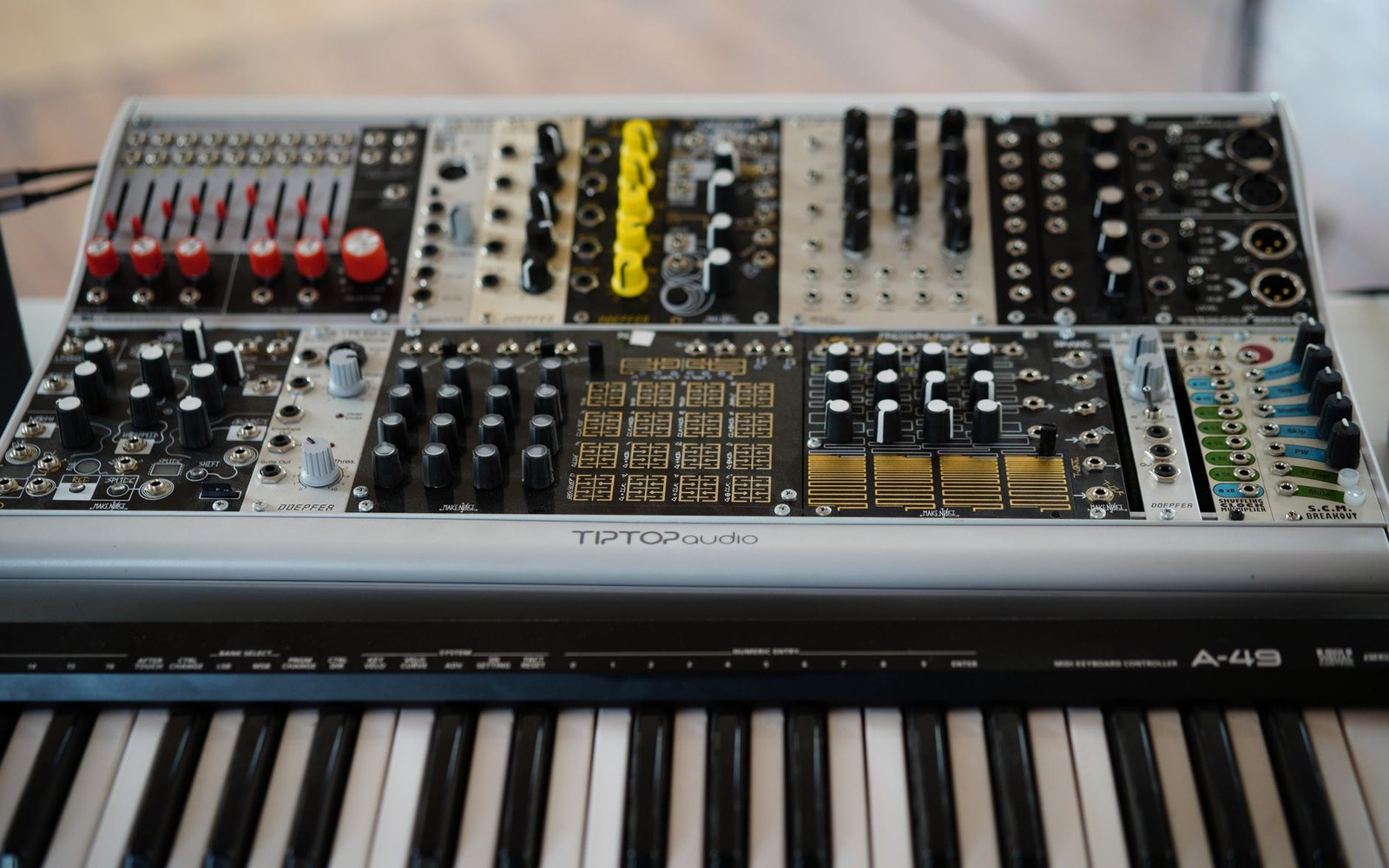
Doepfer Musikelektronik still operates from Munich, still produces the A-100 series, and is routinely cited by Schneiders Büro — Berlin's specialist modular retailer and arguably the European market's clearest signal for what the serious Eurorack buyer is actually purchasing — as a perennial seller precisely because its modules are transparent tools rather than statements. The boutique end of the market runs toward firmware-heavy, deeply algorithmic processors from makers whose entire catalogues may number fewer than a dozen units. Both ends coexist in the same 84HP case.
Why a module holds value the way it does
The used-synth bubble of 2020–2022 inflated prices across a wide range of vintage and semi-vintage keyboards, then corrected. Eurorack modules did not correct in quite the same way, and the reason is structural. A keyboard synthesiser is a complete instrument: it has a defined feature set, a production run, and a clear moment of obsolescence when something more capable appears. A Eurorack module is a component. Its value is partly intrinsic and partly contextual — what it does in combination with what else is in the case. A module that generates random voltages is not made obsolete by a new oscillator; it becomes more useful as the oscillator count in the ecosystem grows.
Certain modules hold secondhand value with remarkable stability. Mutable Instruments' Rings and Plaits, both now open-source, consistently trade above their original retail price on Reverb and in European forum markets. The open-source release — Émilie Gillet published the designs and firmware publicly in the early 2020s when Mutable Instruments ceased production — did not collapse secondhand prices because the clones that followed, many of them sold through Thomann or assembled by small European builders, occupy a different market position from a factory-original unit. Authenticity and builder reputation carry weight in modular that they do not always carry for mass-produced keyboards.
- 1995Doepfer publishes A-100 format specification; first modules ship
- Early 2000sSchneiders Büro establishes as specialist modular retailer in Berlin
- 2012 onwardEurorack module count accelerates sharply; boutique manufacturers proliferate
- 2020–2022Used-synth prices surge broadly; Eurorack secondhand market diverges from keyboard market pattern
- Early 2020sMutable Instruments ceases production; Gillet publishes designs as open source
- 2022Dave Smith dies; legacy includes renewed industry interest in deep modulation architecture
Sequential's Dave Smith spoke about modular's influence on conventional synthesiser design before his death in 2022, noting that the voltage-controlled paradigm Eurorack revived had forced keyboard manufacturers to take patch points and modulation depth more seriously again. The Prophet-5 Rev4 and the Prophet-6 both reflect that pressure. The causality runs both ways: Eurorack attracted players who then expected deeper modulation architecture from everything else they bought.
The economy around the format
The module economy sustains a layer of businesses that have no direct equivalent in the guitar or keyboard world. Panel designers, firmware developers who license code to hardware manufacturers, and case builders all operate as distinct trades. Schneiders Büro has functioned since the early 2000s as a curatorial retailer — one whose buying decisions signal legitimacy to the broader European market — and its inventory is frequently read as a leading indicator of which small manufacturers are gaining traction.
Doepfer's own published format documentation remains the technical reference against which new modules are checked, thirty years after the A-100 launched. That a single technical document produced by a small German company for a niche hardware project has become the load-bearing standard for an industry segment worth hundreds of millions of euros annually is, in itself, the most accurate summary of what Eurorack actually did. It built an open standard and then stood back while the market filled it.