From Broadcast Standard to Consumer Icon
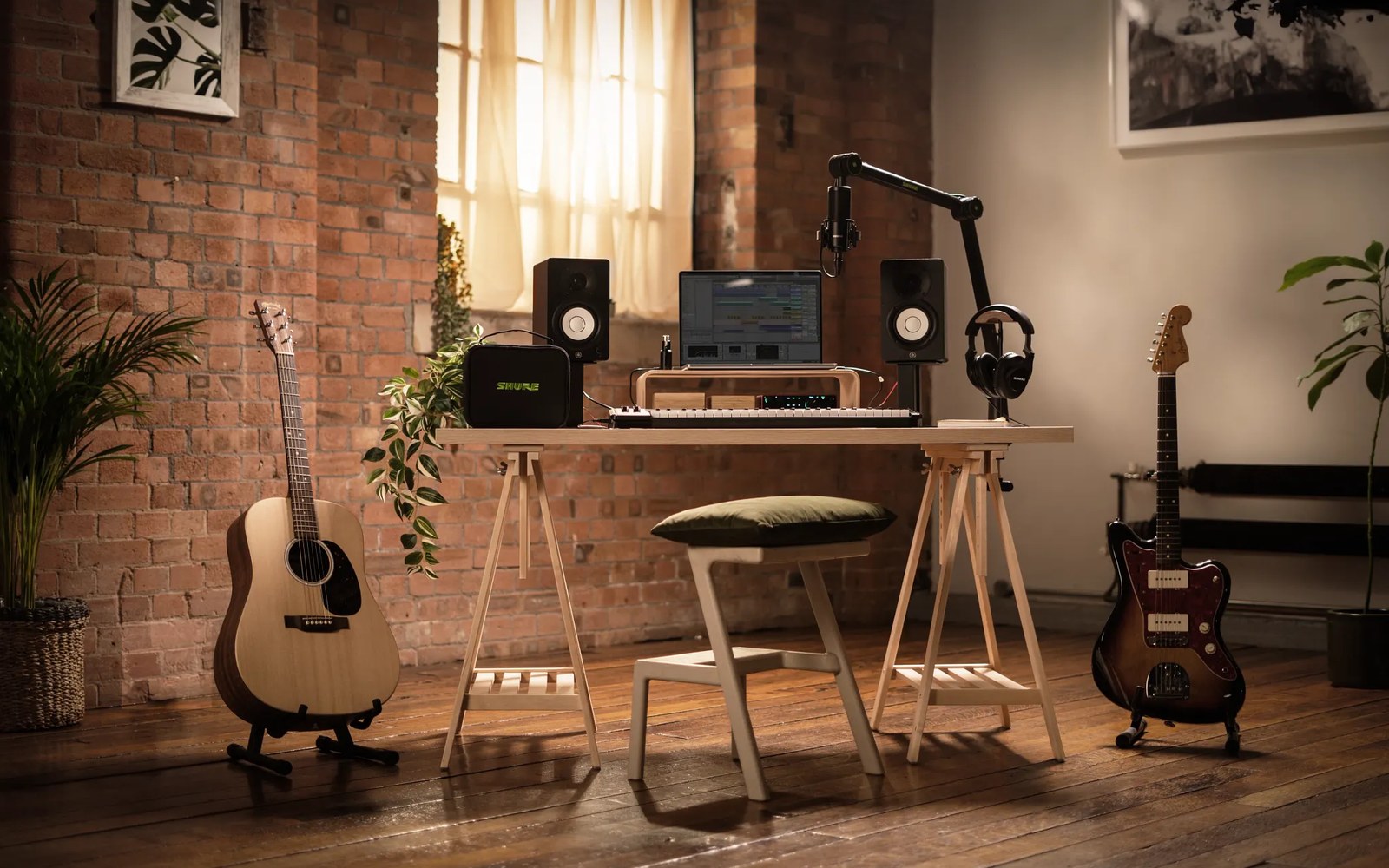
The Shure SM7B, a refinement of the 1973 SM7 that arrived in the early 2000s, descends from the broadcast-oriented Unidyne III capsule lineage that had already produced the SM57 and SM58. The SM7B's distinguishing features — a large internal air-suspension shock mount, a flat wide-range frequency response, and a humbucking coil to reject electromagnetic interference from CRT monitors — were specified for broadcast applications. Radio booths were full of RF noise; the SM7B was designed to ignore it.
Its most-cited recording credit remains the lead vocal on Michael Jackson's Thriller, tracked at Westlake Audio in Los Angeles in 1982, with engineer Bruce Swedien placing it on Jackson's voice for the album sessions. That detail circulated reliably in recording-industry press for decades. It did not, however, make the SM7B a consumer product. It remained a known quantity in broadcast, a competent alternative in vocal recording, and a mic that working engineers respected without considering it essential. Street prices held in a professional-but-attainable bracket — roughly $350–$400 for much of the 2010s — and it sold accordingly: steadily, without urgency.
The Rogan Moment and What Followed
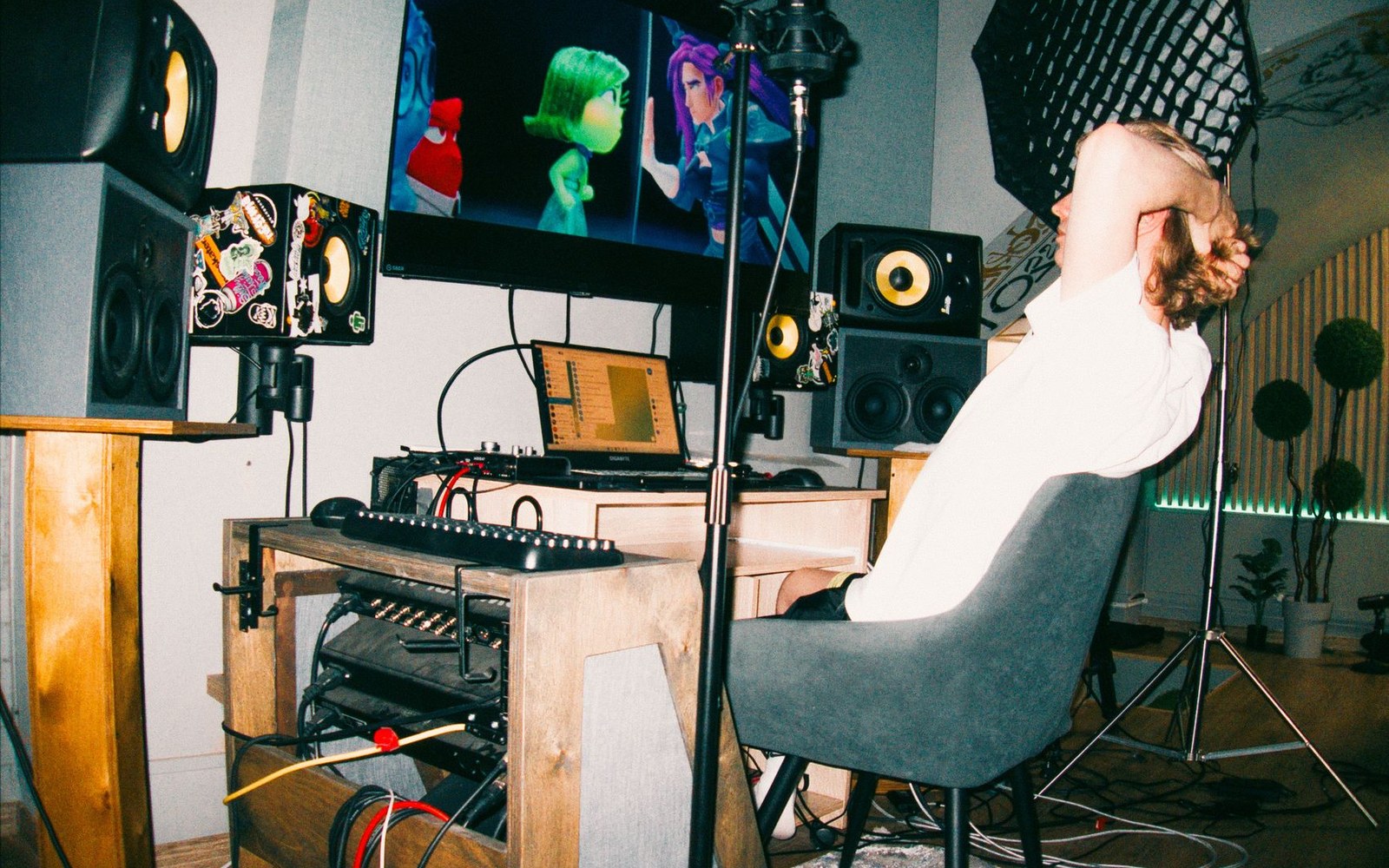
The shift is traceable. Joe Rogan's podcast setup, which featured the SM7B prominently on a Rode PSA1 boom arm, circulated online in the early 2010s and accelerated markedly as The Joe Rogan Experience grew toward its peak audience. The microphone was visible in widely reproduced photographs of his studio and in the video version of the podcast, which became one of the most-watched video podcasts on YouTube before the Spotify exclusivity deal in 2020. Aspiring podcasters, home studio operators, and remote workers treating a microphone purchase as a professional signal adopted the SM7B as the category reference — not because of Thriller, not because of its broadcast credentials, but because the mic was on the most-listened-to podcast in the world and looked the part.
Shure acknowledged the phenomenon without overstating it. In trade and consumer press interviews from the early 2020s, the company noted that SM7B production had scaled substantially to meet demand that consistently outpaced forecasts — a situation unusual for a product in continuous manufacture for decades. Retailer inventory data from that period showed the microphone cycling in and out of stock at major US and European dealers at a rate that was atypical for a professional mic at its price point. Amazon sales-rank data, historically erratic for this category, placed the SM7B in the top positions of the Large Diaphragm Condenser and Dynamic Microphone subcategories through 2021 and 2022, despite its being a dynamic microphone competing in lists where condensers typically dominate. B&H Photo similarly recorded it as a sustained top performer in its microphone category through the same window, a run that broadcast mics at this price had not historically maintained.
The downstream effects were structural. Interface manufacturers, particularly Focusrite with the Scarlett line, began explicitly marketing their higher-gain preamp stages — or pairing recommendations with outboard clean-boost devices like the Cloudlifter — in reference to SM7B ownership. The SM7B's relatively low output sensitivity, a non-issue in a properly equipped broadcast chain, became a talking point in home-studio and podcasting communities, generating a secondary product market. Shure's own product page for the SM7B now lists it unambiguously in categories including "Podcasting," a classification absent from earlier product positioning.
The professional broadcast market never abandoned it. The mic still ships in radio stations and production facilities on its technical merits. What changed is the volume. A product that served a narrow professional vertical for most of its fifty-year life became one of the most-sold dynamic microphones in the world during a three-year window driven almost entirely by consumer identification with a visible media figure's choice of gear. Shure did not redesign it. The capsule, the shielding, the switchable low-cut and presence-boost filters — none of it changed. The market moved around the object, and the object held its ground.