
The Slow Disappearance of the Backline
Nobody announced the transition. No press release came from the valve amplifier industry conceding the market, no headline declared the stack obsolete. Instead, it happened the way most durable shifts happen in working equipment: riders changed, freight bills shrank, and the backline companies started losing recurring rental accounts — one tour, then another, then most of them.
The amp modeller — a digital device that simulates the circuit behaviour of valve amplifiers and effects — had been commercially available in useful form since the late 1990s, when Line 6 introduced the Pod and the industry largely ignored it as a practice tool. What changed in the 2010s was fidelity and trust, in that order. Once the modelling chain could deliver results that engineers at front-of-house couldn't reliably distinguish from a miked cabinet under live conditions, the practical argument for carrying a 4×12 on a forty-date run collapsed.
The Kemper Profiler, introduced in 2012 and built around a proprietary profiling algorithm rather than circuit modelling alone, was the first device to earn genuine adoption among players who had not previously considered going ampless. It did not model an approximation of a Plexi or a Deluxe Reverb; it captured the behaviour of a specific physical unit. That distinction mattered to players who had spent years dialling in a particular amp. The Profiler's price — approximately €1,499 at launch — positioned it above the weekend-warrior market, which meant its early adopters were professionals who had a real cost-benefit calculation to make. The calculation, applied to shipping costs, insurance riders and the increasing difficulty of finding reliable local backline at fly dates, returned a clear answer.
By 2015, when Line 6 released the Helix, the category had matured enough to support a hardware ecosystem. The Helix offered a DSP architecture capable of running multiple simultaneous amp and cabinet simulations, along with signal routing flexible enough to replicate complex pedalboard-and-amp setups without the physical footprint. Line 6, owned by Yamaha Corporation since 2014, had the distribution infrastructure to place the Helix in major retailers and the service network to make it credible for touring use. The Helix became, within a couple of years, the most commonly sighted unit on touring rigs across a range of genres — not because it was unanimously considered the most accurate modeller, but because it was reliable, updatable, and backed by a company that answered the phone.
Fidelity, Then Volume
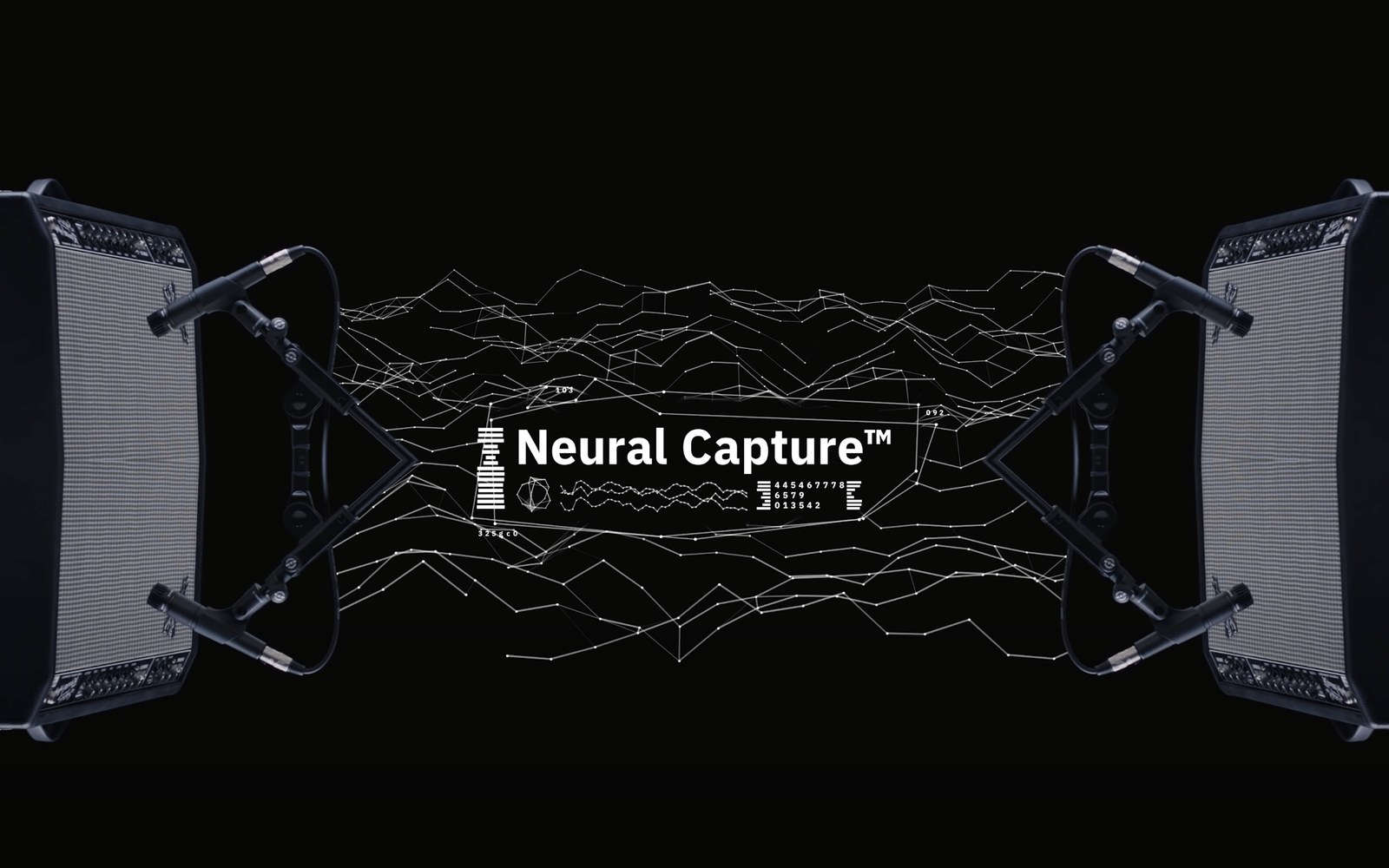
The Neural DSP Quad Cortex, launched in 2021, represented a second inflection point. Neural DSP had built its reputation through software plug-ins — amp simulations that ran inside a DAW and had been adopted widely in recording studios and home setups — before moving into dedicated hardware. The Quad Cortex arrived with a touchscreen interface, onboard neural-network-based profiling, and processing headroom that allowed real-time capture of external amplifiers. It also arrived at a moment when the broader market for digital audio hardware was experiencing the used-synth bubble's reversal, with pandemic-era demand for home studio equipment beginning to plateau; modellers, however, continued to sell.
- 2012Kemper Profiler released; first serious touring adoption of profiling-based modellers
- 2014Yamaha acquires Line 6
- 2015Line 6 Helix released; becomes dominant platform on touring rigs
- 2021Neural DSP Quad Cortex released; neural-network profiling in floor-processor hardware
- 2022IK Multimedia Tonex released; machine-learning capture below $500; Tone.net marketplace launches
IK Multimedia's Tonex, released in 2022, shifted the centre of gravity again. Where the Quad Cortex was a full floor-processor platform, the Tonex was built around a single proposition: machine-learning-based tone capture of amplifiers, pedals, and rigs, available both as software and as a compact hardware pedal. The Tonex Pedal, priced below $500 at launch, brought capture-based modelling to a price point that put it within reach of club-circuit working musicians rather than exclusively headlining acts. The Tonex ecosystem also introduced a marketplace model — Tone.net — where users could share and sell captured amp profiles, creating a secondary economy within the product. The business logic was transparent: IK Multimedia was not merely selling a device, it was building a library.
The progression from Kemper to Helix to Quad Cortex to Tonex traces a consistent arc: fidelity improving, price falling, form factor shrinking, and the installed base widening with each generation. According to NAMM's Global Report data, the broader amplifier category saw declining unit volume through the late 2010s and into the early 2020s, while the effects and signal-processing category — which captures modellers — moved in the opposite direction. The shift was not absolute; valve amplifier sales persisted, particularly in the boutique and collector segments. But the working-musician market was no longer buying stacks at the rate it had in 2005.
The Rider as Evidence
Tour riders are private documents and don't aggregate into public datasets, but the backline rental industry's contraction is audible in the trade. Major backline companies in the US and UK reported through the mid-2020s that fly-in dates — where the act carries personal hardware and asks the promoter to provide only a power strip and monitor mix — had become the norm at arena level. The 4×12 cabinet was increasingly requested only by acts that had made the valve stack part of their visual identity, not their technical requirement.
The IEM (in-ear monitor) adoption curve accelerated this. Once a touring act committed to a fully custom in-ear mix, the on-stage amp became acoustically redundant — a box generating stage wash that interfered with the controlled sound field the IEM system was built to provide. Eliminating the amp entirely and sending the modeller's output direct to the console solved the problem cleanly. Front-of-house engineers who might once have placed a Shure SM57 in front of a Celestion-loaded cabinet were instead receiving a line-level signal and, increasingly, preferring it — not because it always sounded identical, but because it was consistent across every night of the run.
The recording context ran parallel. Producers who had tracked guitars through vintage Marshalls or Fenders in dedicated live rooms found that machine-learning capture technology in the studio reduced setup time without measurably altering the result on record. The UA 1176's role as a dynamics reference in the mix chain remained undisturbed; what changed was what arrived at the compressor's input stage. A modeller through a good interface feeding a digital console replaced an afternoon of microphone placement.
None of this was a clean binary. Plenty of working guitarists carry both — a modeller for fly dates and an amp for when the truck is going anyway. Boutique amp builders in Nashville and elsewhere maintained order books through the 2020s, largely because the collector and enthusiast market decoupled from the touring market and followed its own logic. The valve amplifier did not die; it became a deliberate choice rather than a default one, which is a different kind of status.
The transition happened venue by venue, rider by rider, across roughly a decade. By 2022, when the Tonex arrived at sub-$500 pricing with capture-based fidelity, the question had shifted from whether modellers were good enough to why you would carry anything heavier. That is when the replacement was complete — not because the argument was settled, but because most of the people who needed to decide had already decided.