
The Debt That Built Up Slowly, Then All at Once
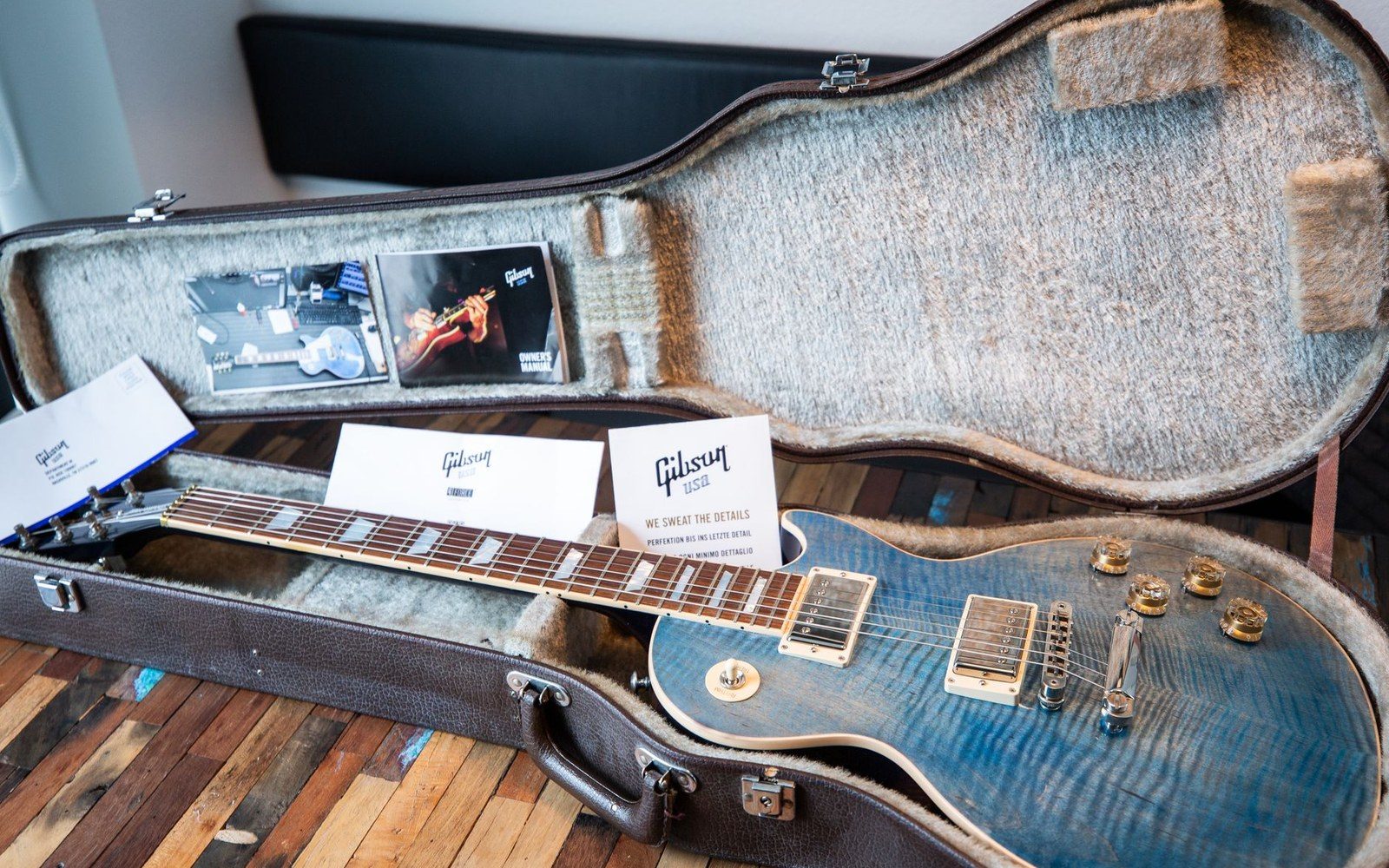
Henry Juszkiewicz and his business partner David Berryman bought Gibson in 1986 for roughly five million dollars. What they acquired was a storied but operationally chaotic company — one that had spent the previous decade fighting off cheap imports, losing ground to Fender, and cycling through management. Juszkiewicz stabilized the manufacturing, expanded the Custom Shop, and in the early years built a reasonable case for himself as the executive who had saved the brand.
The US Bankruptcy Court filing in Delaware in May 2018 told a different story. By the time Gibson reached Chapter 11 — the US bankruptcy protection process that allows a company to restructure its debts while continuing to operate — it was carrying approximately half a billion dollars in debt, much of it due imminently. The filing listed senior secured notes totaling around $375 million that matured in July 2018 and a revolving credit facility that had been drawn down. There was no credible refinancing path. The company had roughly 2,400 employees globally and manufacturing commitments in Nashville, Memphis, and Bozeman that could not simply be paused. Juszkiewicz, who had remained CEO for thirty-two years, stepped down in October 2018, when the KKR deal closed.

The Diversification Strategy in Full
The debt load did not accumulate from guitar manufacturing. It accumulated from acquisitions. Juszkiewicz had pursued a strategy — explicit in Gibson's own communications during the 2010s — of transforming the company from a musical instrument maker into a premium consumer-electronics lifestyle brand. The logic, stated plainly, was that guitar sales were declining and that the Gibson name carried enough cachet to travel into adjacent product categories.
What that meant in practice: Gibson acquired Philips' licensed consumer-electronics products division, brought in the TEAC and Onkyo audio brands under a subsidiary called Gibson Innovations, and attempted to integrate high-end home audio with its instrument legacy. None of those bets paid. The consumer-electronics market is a different competitive environment from instrument manufacturing — thinner margins, faster obsolescence cycles, distribution dynamics that do not reward brand heritage the way the instrument market does. Gibson Innovations, the subsidiary holding most of these assets, became a source of cash drain rather than diversification benefit.
What survived scrutiny on the instrument side was the core business the company had always had: Les Paul standards, SGs, ES-series semi-hollowbodies, the Custom Shop. Guitar Center, then Gibson's largest retail account in the United States, continued moving the core catalogue. But wholesale revenue from instruments was not enough to service the debt the electronics acquisitions had generated, and when the credit markets tightened, there was no cushion.
- 1986Juszkiewicz and Berryman acquire Gibson for approximately $5 million
- 2011US Fish & Wildlife Service raids Gibson's Nashville and Memphis facilities under the Lacey Act; settlement follows
- 2017CITES Appendix II listing covers all Dalbergia (rosewood) species
- May 2018Gibson files Chapter 11 in Nashville Chancery Court; Juszkiewicz resigns
- October 2018KKR acquisition closes; restructuring complete
- 2019Memphis factory closes; ES production moves to Nashville; Original/Modern/Custom Collections taxonomy introduced
The 2011 Lacey Act raids on Gibson's Nashville and Memphis facilities — a separate and prior episode — had already cost the company millions in legal fees and an eventual settlement of roughly three hundred thousand dollars plus a community service payment of fifty thousand dollars to conservation organisations. That episode did not cause the 2018 filing, but it consumed management attention and cash during years when the balance sheet could not afford distraction.
What KKR Reversed First
The restructuring was unusually swift. KKR, the private equity firm, emerged as the buyer of the reorganised business in a deal that closed in October 2018, roughly five months after the original filing. The debt was restructured, the electronics subsidiaries were shed, and Gibson's Chapter 11 process became a case study in what a controlled pre-packaged restructuring can accomplish when creditors have a clear recovery path and no viable alternative.
James "JC" Curleigh, the incoming CEO — who had previously run Levi Strauss & Co.'s global brand — was explicit about the strategic reset: Gibson would stop trying to be a consumer-electronics company and return to being the world's most recognised guitar brand. The Onkyo and TEAC assets were divested. Gibson Innovations was wound down. The Memphis factory, which had produced ES-series instruments since the 1970s after the original Kalamazoo plant closed, was closed in 2019; ES production moved to Nashville.
The Custom Shop in Nashville — arguably the part of Gibson that had remained most coherent throughout the Juszkiewicz years — was positioned as the flagship of the renewed brand. The Original, Modern, and Custom Collections reorganised the catalogue in 2019 into a structure that distinguished between historically accurate builds and player-oriented modifications. That taxonomy has remained the framework since.
Materials questions that had complicated Gibson through the Juszkiewicz era did not disappear under new ownership. The 2017 CITES Appendix II listing of all Dalbergia species — the genus covering all true rosewoods — continued to affect fingerboard sourcing. Gibson, like Taylor and most acoustic and electric manufacturers, shifted toward certified-stock rosewood and supplementary materials including Richlite, the paper-and-resin composite, and granadillo on some models. These were trade-wide adjustments, not Gibson-specific, but they fell during a period when Gibson's supply chain team was being rebuilt under new management and every sourcing decision attracted scrutiny.
What the Era Cost and What It Left
Thirty-two years is a long tenure for any CEO. Juszkiewicz presided over real achievements: the Custom Shop expansion, the Historic reissue programme that produced faithful reproductions of 1950s and 1960s instruments, and the acquisition of the Baldwin piano assets that eventually became a standalone Gibson Piano brand. The PLEK machine — an automated fret-levelling system licensed from a German company — was introduced across Gibson's production floor under his watch, raising fret-work consistency.
What the tenure also produced was a balance sheet that made the company structurally vulnerable to any revenue shortfall, and a diversification strategy that the instrument market and the consumer-electronics market both rejected. The brands acquired in the electronics expansion lost value faster than they generated returns; the Guitar Center relationship, which had provided reliable sell-through volume for decades, could not compensate for the carrying cost of debt at those levels.
The instrument business that emerged from Chapter 11 in late 2018 was smaller, focused, and solvent. It had shed the liabilities that had made the filing inevitable and returned to the one thing the Gibson name had always been able to sell: guitars with a history long enough that players treat the serial number as evidence of provenance. Whether the KKR-backed company will resolve every quality-control complaint that accumulated during the later Juszkiewicz years is a separate and ongoing question. But the strategic argument — that Gibson should be a guitar company — was settled by the bankruptcy filing before the new ownership ever arrived.